


Buying Air Filters is Not For the Faint of Heart
You walk into the store because you need an air filter.
Simple enough.
Then you get to the aisle.
There are $6 filters. $15 filters. $30 filters. Filters for pets. Filters for allergies. Filters that claim to capture microscopic particles. And then there are numbers like MERV 8, MERV 11 and MERV 13 all over the packaging.
So naturally, you think:
“I’ll just buy the most expensive one. It must be the best.”
Not necessarily.
At Sears Heating & Cooling, this is one of those simple homeowner decisions that we wish wasn’t made so confusing.
The best HVAC air filter isn’t necessarily the one with the highest number or biggest price tag.
It’s the filter that’s right for your home, your family—and your HVAC system.
Here’s how to figure that out.
First, What Does an HVAC Air Filter Actually Do?
Your furnace filter has two important jobs.
It helps capture airborne particles before they’re circulated through your HVAC system, and it helps protect the heating and cooling equipment itself from accumulating dirt and debris.
Depending on the filter, that can include particles such as:
- Dust
- Pollen
- Pet hair and dander
- Lint
- Other airborne debris
But there’s a tradeoff homeowners need to understand.
The more restrictive a filter becomes, the harder it can be for air to pass through it.
And your HVAC system needs proper airflow to operate correctly.
That’s why simply grabbing the filter with the highest filtration rating isn’t always the right answer.
What Is a MERV Rating?
MERV stands for Minimum Efficiency Reporting Value.
In simple terms, it’s a rating used to describe how effectively an air filter captures particles of different sizes.
Generally, the higher the MERV rating, the smaller the particles the filter can capture.
Sounds like higher should always be better, right?
Here’s where it gets complicated.
A higher-MERV filter can also create more resistance to airflow. Whether that’s a problem depends on the filter itself and the HVAC system it’s installed in.
Putting a highly restrictive filter into a system that wasn’t designed for it can potentially reduce airflow and make the system work harder.
The goal isn’t maximum filtration at any cost. It’s the right balance between filtration and airflow.
MERV 8 vs. MERV 11 vs. MERV 13: Which One Do You Need?
There isn’t one answer that’s right for every house.
MERV 8
For many homes, a MERV 8 filter can provide a good balance of everyday filtration and airflow.
It can help capture common household particles without unnecessarily restricting airflow in many residential HVAC systems.
MERV 11
Homeowners may consider stepping up in filtration when there are additional indoor air quality concerns, including:
- Pets
- Higher amounts of dust
- Seasonal pollen
- Other household airborne particles
But again, you want to make sure the filter is appropriate for your particular HVAC system.
MERV 13
MERV 13 filters can capture smaller particles than lower-rated filters, which makes them attractive to homeowners concerned about indoor air quality.
However, that doesn’t automatically make MERV 13 the best filter for your furnace.
Before moving to a higher-efficiency filter, it’s smart to make sure your system can maintain proper airflow with it installed.
That’s something an HVAC specialist can help determine.
Have Pets? Your Filter May Need More Attention
We love our dogs and cats.
Your HVAC system?
It mostly notices the hair and dander.
Homes with pets can load an HVAC filter faster, particularly when pets shed heavily or multiple animals live in the home.
That doesn’t necessarily mean you need the most expensive “pet” filter on the shelf.
It may simply mean you need to check and change the right filter more frequently.
Your home’s circumstances matter more than the marketing on the package.
What About Allergies?
If someone in your home deals with seasonal allergies, pollen or other airborne irritants, improved filtration may help reduce some particles circulating through the HVAC system.
But an HVAC filter is only one part of indoor air quality.
Humidity, ventilation, ductwork, housekeeping, pets and the condition of the HVAC system can all play a role.
If indoor air quality is a major concern for your family, don’t assume that installing the highest-MERV filter you can find solves everything.
Talk to an HVAC specialist about the entire home.
How Often Should You Change Your Furnace Filter?
You’ve probably heard:
“Change your filter every 30 days.”
That’s easy to remember, but it’s not necessarily right for every homeowner.
How quickly a filter becomes dirty can depend on:
- The type and size of filter
- How often your HVAC system runs
- The number of people in the home
- Pets
- Dust levels
- Home renovations
- Smoking
- Outdoor air conditions
- The time of year
Instead of relying entirely on the calendar, check the filter regularly. Checking your filter is also one of the first things on our fall furnace prep checklist, especially before heating season kicks in.
If it looks dirty or clogged, it’s probably time to replace it.
And remember: a filter may need to be changed more frequently during periods when your HVAC system is running heavily.
Yes, You Can Install an Air Filter Backwards
It happens more often than you might think.
Most disposable HVAC filters have an arrow printed somewhere along the edge.
That arrow indicates the direction of airflow.
The arrow should point toward the furnace or air handler, following the direction the air travels through the system.
Installing the filter backwards can affect how it performs and may increase airflow resistance.
When you’re removing the old filter, take a quick look at the arrow before pulling it out. It’ll make installing the replacement much easier.
Don’t Forget the Most Important Detail: The Size
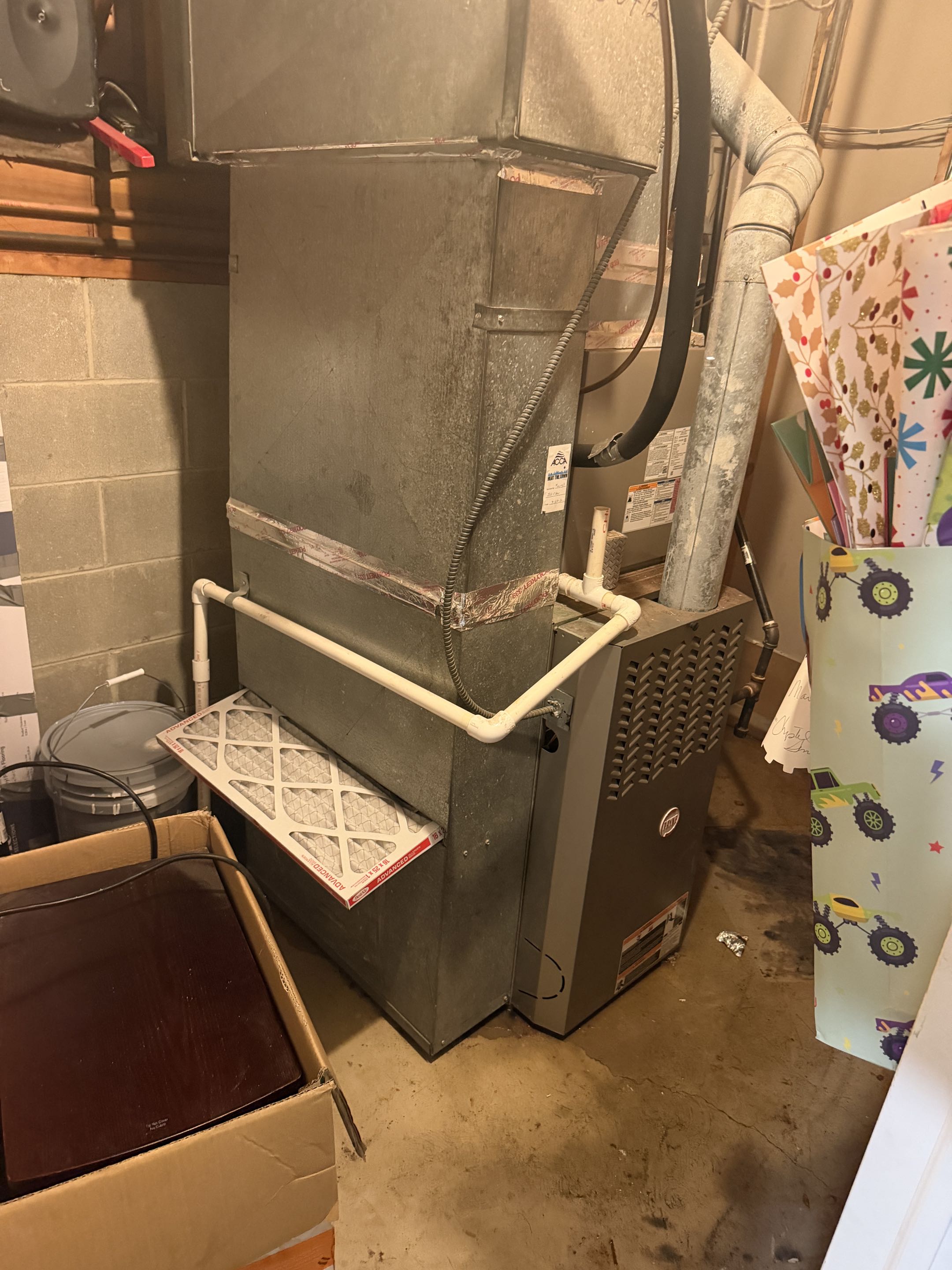
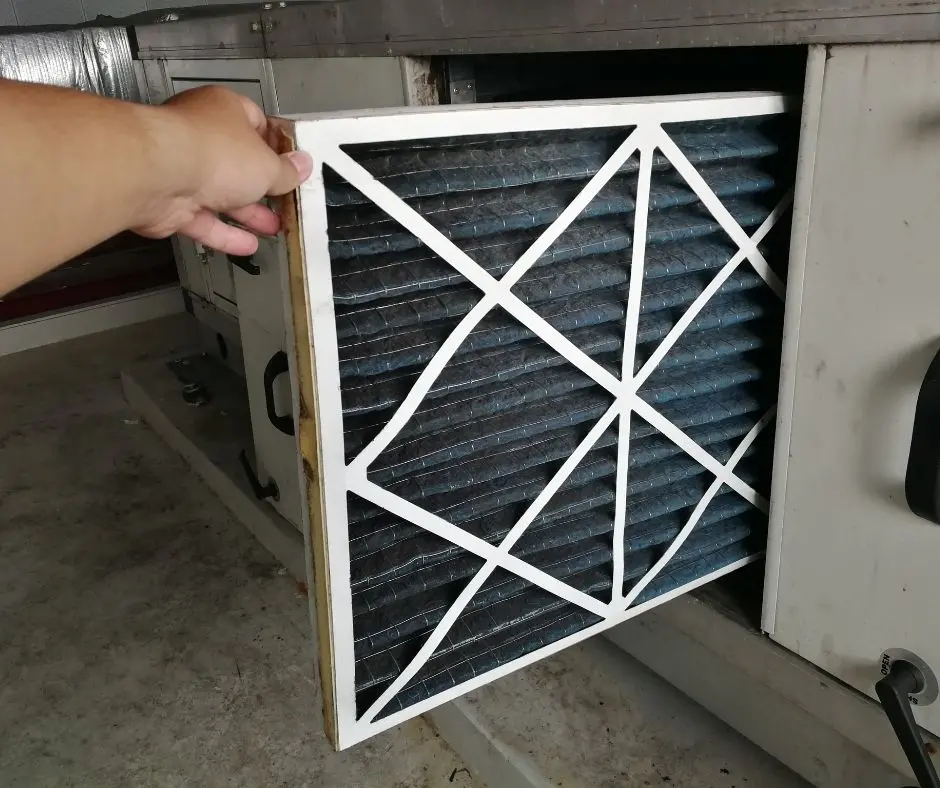
Before heading to the store, check the dimensions printed on your existing filter.
A filter that doesn’t properly fit the filter slot can allow air to bypass it, reducing its effectiveness.
And don’t assume you remember the size.
There are a lot more filter sizes than most homeowners realize.
Take a picture of the existing filter dimensions with your phone. You’ll thank yourself when you’re staring at that giant filter aisle.
The Most Expensive Filter Isn’t Necessarily the Best Filter
This is probably the biggest takeaway.
When it comes to HVAC filters:
More expensive doesn’t automatically mean better for your home.
And:
Higher MERV doesn’t automatically mean better for your HVAC system.
The right filter should provide the level of filtration your household needs while still allowing your heating and cooling equipment to receive the airflow it was designed for.
That’s the balance that matters.
Not Sure Which Filter Your Furnace Needs? Ask Us.
At Sears Heating & Cooling, we’ve been helping Central Ohio families take care of their heating and cooling systems since 1950.
And sometimes taking care of your HVAC system doesn’t require a major repair or a new piece of equipment.
Sometimes it’s as simple as making sure you’re putting the right filter in it.
If you’re confused about MERV ratings, filter sizes or which type of air filter makes sense for your home, ask your Sears Heating & Cooling technician during your next service or maintenance visit.
We’ll help you find the right answer for your system—not simply the most expensive filter on the shelf.
That’s part of what Family Taking Care of Families means to us. Call 614-475-1800 or schedule an appointment online, and we’ll help you get it right.